
Handing over your car keys after an accident can feel strange. One moment you’re responsible for getting your vehicle from point A to point B, and the next, it’s sitting in a stranger’s lot waiting for repairs you can’t see or control. If you’ve never been through the collision repair process before, that uncertainty can be unsettling. Understanding what actually happens behind the scenes at an auto body shop can ease that anxiety and help you know what to expect at each stage.
The Initial Inspection
Once your car arrives, the first thing that happens isn’t a wrench touching a bolt. It’s a thorough visual inspection. A technician walks around the vehicle, documenting visible damage with notes and photographs. This isn’t just a formality — it creates a baseline record that will be used for insurance documentation and repair planning.
During this stage, the shop is looking for more than what meets the eye. Many collisions cause damage that isn’t immediately obvious, like bent frames, misaligned suspension components, or internal mechanical issues hidden beneath bumpers and panels. A good auto body shop knows that what you see on the surface is often just a fraction of the actual damage.
Teardown and Deeper Diagnosis
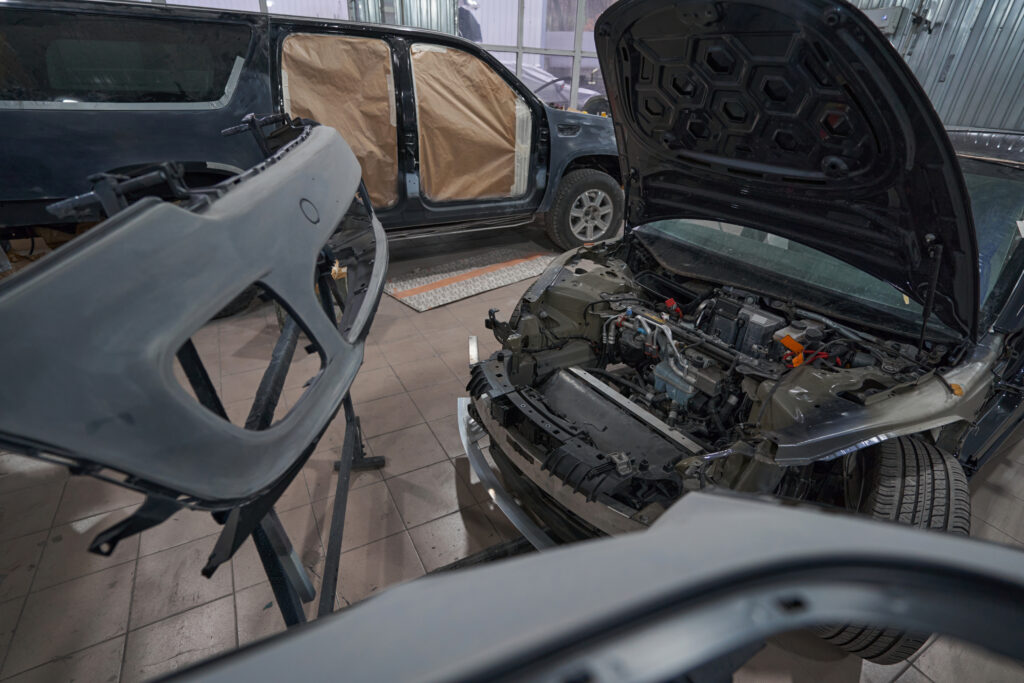
After the initial inspection, many shops perform what’s called a “teardown.” This involves removing damaged panels, bumpers, or other components to get a clearer look at what’s happening underneath. Think of it like a doctor ordering imaging tests after a physical exam — the teardown reveals the full extent of the injury.
This step often uncovers additional damage that wasn’t visible when the car first rolled in. It’s one of the most common reasons repair estimates change after the initial quote. The shop isn’t trying to inflate costs; they’re responding to what the vehicle’s structure actually reveals once it’s opened up.
Writing the Repair Estimate
With a complete picture of the damage, the shop puts together a detailed repair estimate. This document outlines the parts that need replacing, the labor involved, and the associated costs. If your repair is being covered by insurance, this estimate typically gets sent to the insurance company for review and approval.
Sometimes there’s back-and-forth between the shop and the insurer about what’s necessary and what isn’t. This negotiation process can add time to the timeline, but it’s an important step to ensure the repair is done correctly rather than cutting corners to save money.
Ordering Parts
Once the estimate is approved, the shop orders the necessary parts. Depending on your vehicle’s make and model, this can take anywhere from a day to several weeks. Rare or specialty vehicles, as well as certain foreign makes, often require parts that aren’t sitting on a shelf nearby. Supply chain delays can also play a role here, something that’s become more common in recent years.
This is often the stage where customers feel the most impatient. The car isn’t visibly being worked on, but the shop is actively coordinating logistics to keep the repair moving forward.
The Actual Repair Work
With parts in hand, the real transformation begins. Technicians address structural damage first, often using specialized equipment to restore the frame to its original specifications. From there, body panels are repaired or replaced, and the vehicle moves through various stages, including bodywork, priming, and painting.
Paint matching is a particularly meticulous part of this process. Auto body shops use computerized color-matching systems to ensure the new paint blends seamlessly with the existing finish, so your car doesn’t end up with a noticeable patchwork look.
Reassembly and Quality Control
After painting, all the components that were removed during teardown get reinstalled. This includes lights, trim, bumpers, and any mechanical parts that were affected. Once reassembly is complete, the vehicle goes through a quality control check. Technicians test everything from panel alignment to electrical systems, making sure nothing was overlooked.
Many shops also take the car for a test drive at this stage to confirm everything functions as it should, from the alignment to the sensors and safety systems that modern vehicles depend on.
Final Cleaning and Pickup
Before you get your car back, most auto body shops give it a thorough cleaning, both inside and out. It’s a small touch, but it signals attention to detail and care for the overall customer experience. When you arrive to pick up your vehicle, someone should walk you through the repairs that were made, answer any questions, and provide documentation for your records.
Understanding this process doesn’t just satisfy curiosity. It helps you communicate better with your shop, ask informed questions, and feel confident that your vehicle is in capable hands throughout a process that, while sometimes lengthy, is designed to get you back on the road safely.