
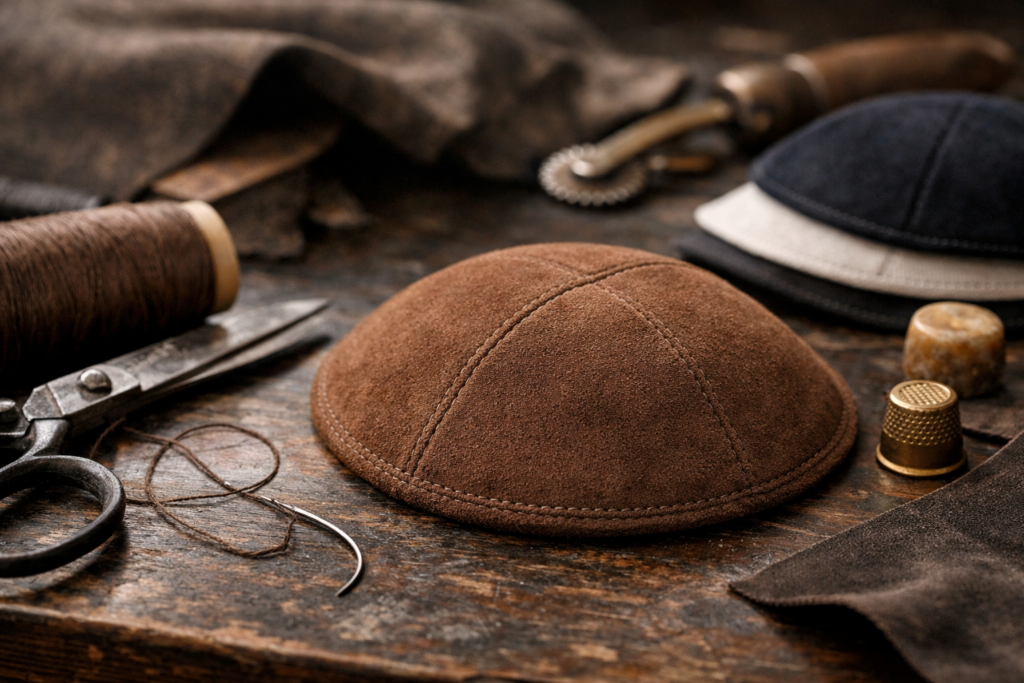
Key Takeaways
- Compare a suede kippah against black velvet, cotton, and linen before buying for daily wear; grip, heat, and shape retention matter more than looks alone.
- Check whether a suede yarmulke is built as a single panel or multi-panel piece, since that changes how it sits, how it wears, and how often it needs adjusting.
- Match the kippah style to the setting: synagogue, school, work, and public wear all put different demands on a suede kippah.
- Inspect stitching, edge binding, and sizing consistency in any bulk suede kippahs order, because small flaws show up fast when the same piece gets worn every day.
- Choose colors and finishes that fit the dress code before ordering custom kippahs, especially if the goal is a low-profile daily kippah rather than a statement piece.
- Weigh suede against traditional materials on comfort, cleaning, and longevity so the purchase fits real daily use, not just the first wear.
Suede kippah sales keep climbing because a lot of wearers want one thing that plain velvet doesn’t always give them: a more secure, less fussy daily kippah that still looks proper in synagogue, school, or at work. The honest answer is that suede has a real place in regular rotation. It grips better than slicker fabrics, feels lighter than heavier formal pieces, and it doesn’t shout for attention.
For men and boys who wear a kippah every day, that matters. For observant households buying in volume, it matters even more, because a kippah that slips, wrinkles, or looks tired after a few weeks turns into shelf clutter fast. Suede can solve that problem — if the cut, panel count, and finish are right. And if the fit’s wrong? It won’t stay put. That’s where the real buying decision starts.
Suede kippah basics: what it is, how it wears, and why people choose it for a daily kippah
About 6 out of 10 daily-wear buyers start by asking what feels stable, not what looks fancy. That’s why a Suede kippah keeps showing up in search for men who want a kippah that wears well, sits low, and doesn’t feel slippery in public. It’s the practical middle ground. Not flashy. Not fussy.
What a suede kippah looks and feels like compared with a black velvet kippah, leather yarmulke, or linen panel style
A black suede kippah feels drier in the hand than velvet, with less sheen and a more muted finish that works with a suit, a school uniform, or a weekday jacket. A leather yarmulke reads firmer and dressier; linen feels lighter, but it wrinkles faster. A navy suede kippah splits the difference — calm color, soft texture, no loud pattern, no beaded shine, and no weird “frik” look that some boys hate once they’re wearing it all day.
How suede behaves during wear: grip, comfort, weight, and the single-panel versus multi-panel difference
Suede grips hair better than polished materials, so it tends to stay put during work, walking, or a long mitzvah program. Single-panel builds usually sit flatter and feel lighter; multi-panel styles add shape, which some men prefer for a more finished look. A suede kippah bulk order often makes sense for schools and shuls because the material holds its shape without needing constant fussing. That matters when 30 boys are wearing the same piece.
Common search terms people use for this piece: kippah, yarmulke, yamaka, kippahs, and the meaning behind daily wearing
People search kippah, yarmulke, yamaka, and kippahs because the meaning is simple: daily wearing signals identity, discipline, and habit. What differs is the material choice. For some, suede is the best plain answer. For others, the black panel version is enough.
Daily wear performance: when a suede kippah works best for synagogue, school, work, and public settings
Write this section as if explaining to a smart friend over coffee — casual but accurate and specific. A Suede kippah handles daily wear well because it sits between a velvet kippah and a cotton kippah: softer than a stiff black yarmulke, less shiny than a moire kippah, and easier to keep looking neat through a full day of wearing. For men who want a suede yarmulke for men, that balance matters. It reads respectable in synagogue, fine at a mitzvah, and quiet enough for public settings where a single pattern or beaded style would feel too loud.
Heat, sweat, and all-day wear: where suede beats heavier fabrics and where it falls short
In warmer months, suede usually feels lighter than leather or thick wool, so it works better for 6-panel construction and long school days. But suede isn’t magic. If a wearer sweats heavily, a suede kippah can show marks faster than linen or cotton, so a backup matters. A black suede kippah tends to hide scuffs better, while a navy suede kippah looks sharper with dark suits and fall layers.
Durability for regular use: stitching, shape retention, and how a suede kippah handles repeated wear
The honest answer is that stitching decides more than the material alone. Tight seams, firm backing, and clean edge work help a suede kippah keep its shape after dozens of wears. For schools and synagogues ordering in volume, a suede kippah bulk order makes sense when consistency matters more than novelty (and it usually does).
Practical fit concerns for men, boys, and women who wear kippah styles in public or for a mitzvah
Fit changes everything. Boys often need a slightly smaller dome so the kippah doesn’t slide during recess or davening, while women wearing kippah styles in public often prefer a flatter profile that stays discreet. If the question is pronunciation, people still call it kippah, yamaka, or yarmulke — same item, different habits. Realistically, suede works best for wear that needs to look calm, hold up, — stay out of the way.
The short version: it matters a lot.
Suede kippah versus traditional materials: black velvet, white moire, beaded, lace, cotton, and custom options
Suede kippah choices are more practical than decorative alone.
- Black suede kippah looks closest to a formal black velvet kippah, but it feels drier in hand and holds shape better for all-day wear.
- White moire, beaded, and lace styles read dressier for a mitzvah or wedding, yet they pick up marks fast and don’t suit daily wear the way a suede yarmulke does.
- Cotton and linen breathe better in the fall, but suede stays steadier on the head when a boy moves fast, bows in davening, or wears it in public for school.
Solid color suede kippot versus two-tone and embossed styles: which looks most formal and which feels most casual
A black suede kippah or navy suede kippah usually looks most formal in a single panel build. Two-tone versions feel more relaxed, while embossed edges add a little polish without turning into something flashy. That difference matters for boys who wear a kippah every day and still need it to look right next to a blazer.
For bulk buyers, a suede kippah bulk order makes sense only if consistency matters more than variety. Schools — shuls usually want the same shade, same panel count, same finish.
Material tradeoffs for daily use: suede versus velvet, cotton, linen, moire, and custom panel builds
Suede sits between velvet and cotton: softer than linen, less shiny than moire, and easier to keep looking neat than beaded or lace styles. The honest answer is that it won’t stay pristine forever, but it wears well when rotated and brushed lightly.
What differences matter most: grip, texture, appearance, cleaning, and how each material wears over time
Grip wins. Texture comes next. Appearance matters, sure, but a kippah that slips every ten minutes isn’t the best one, no matter how fine the fabric looks.
Here’s what that actually means in practice.
Choosing the best suede kippah for regular use: size, shape, color, and pattern decisions that hold up
Can a suede kippah really replace the old standby for daily wear? Yes — if the fit is right and the finish doesn’t fight the wearer all day. A suede kippah gives a clean look for work, shul, and school, but it has to sit well during davening, walking, and long stretches of wear.
Flat, dome, and single-panel constructions: which shape stays put and which one suits daily work wear
Flat styles sit close and feel familiar to a lot of men who wear a kippah from morning to night. Dome shapes add a little structure, which helps if the hair is fine or the head shape is rounded. Single-panel builds can feel lighter, while a 6 panel suede kippah usually holds its form better after months of repeated use.
For bulk buyers, that consistency matters. A navy suede kippah works well for school dress codes, and a black suede kippah is still the safest pick for daily use. A suede yarmulke for men should feel settled, not fussy.
Color choices that match a dress code: black, white, golden, patterned, and other low-profile options
Black stays the default. White shows up more for simchas and warm-weather wear. Golden and patterned options can work, but they read louder, so they’re better for a bar mitzvah yarmulke than a school uniform. In practice, plain suede wins for public settings; patterned suede is for the guy who wants a little personality without going beaded or flashy.
Fit and finish details buyers should check: lining, stitching, edge binding, and whether the kippah feels magic in place or needs adjustment
Check the lining first. Then the stitching, then the edge binding. If the rim curls after a few wears, it won’t last in a wholesale stack, and a suede kippah bulk order needs every piece to land the same way. Ask a blunt question: does it feel magic in place, or does it need constant adjusting? That’s the real test.
Buying suede kippahs in volume: what schools, synagogues, and wholesale buyers should look for before ordering
Volume orders fail fast when the suede kippah looks good in a sample and drifts in the second dozen. The answer is boring, which is good: lock down shade, sizing, and panel count before any money changes hands.
Consistency across a bulk order: shade matching, panel uniformity, and reliable sizing from one batch to the next
A black suede kippah should not arrive with three different blacks. Ask for batch photos, a size chart, and a written note on whether the order is single panel or multi-panel; that’s where most mismatches start. A navy suede kippah can read lighter under bright synagogue light, so compare it against the same fabric swatch, not a screen image. For a suede kippah bulk order, schools should also check edge stitching and crown depth (those two details decide whether it stays put during work, a mitzvah, or public wearing).
Turnaround, replacement, and customer review checks: what separates the best supplier from a risky one
Speed matters, but replacement policy matters more. A supplier that ships 200 pieces in 10 days and won’t fix 12 bad ones is a risk. Read real customer reviews for words like “consistent,” “reordered,” and “fit”; those tell more than polished product copy. If a listing calls out suede yarmulke for men, look for the same care in returns and proof photos (not just one staged image).
Final decision factors for transactional buyers: daily wear expectations, budget, and whether suede should replace traditional materials or just join the rotation
Suede kippah options work best as part of a rotation, not a one-size answer. The tactile feel is strong, the look is polished, and the price usually sits above cotton but below many leather styles. For bulk buyers, that balance can make sense for daily wear, but the best order still leaves room for the classic black velvet kippah when the day calls for it.
Frequently Asked Questions
What is a kippah and why is it worn?
A kippah is a Jewish head covering worn as a sign of reverence. For a suede kippah, the appeal is simple: it looks refined, feels soft, and works well for regular wear, synagogue, school, or a family simchah.
What do different colors of kippah mean?
Most colors don’t carry a fixed meaning. Black is usually the safest, most traditional choice, while navy, tan, gray, and brown suede kippahs are often picked for outfit matching, age, or setting. In practice, the color says more about style than law.
What is a moire kippah?
A moire kippah is made with a fabric that has a wavy, water-mark look. It’s dressier than a basic cotton style, but it’s a different finish from suede. If the goal is everyday use with a clean, understated look, suede kippahs are usually the better buy.
Is it okay to throw out a kippah?
If a kippah is worn out, torn, or no longer fit for use, it shouldn’t be treated like ordinary trash without thought. Many people set aside worn religious items respectfully, and some communities have preferred disposal practices. When in doubt, don’t toss it casually.
Are suede kippahs good for daily wear?
Yes. A suede kippah holds up well for daily wear because it has enough structure to sit neatly and enough texture to stay in place better than slicker fabrics. It’s a strong choice for boys and men who want something polished without looking stiff.
Do suede kippahs work for weddings and bar mitzvahs?
They do, especially in black, navy, or two-tone combinations. Suede reads dressy without feeling flashy, so it fits a bar mitzvah, a wedding, or a formal Shabbos table better than a novelty print. For bulk orders, it also photographs well and keeps a uniform look.
That gap matters more than most realize.
What’s the difference between a suede kippah and a velvet kippah?
Velvet is smoother and more formal-looking. Suede has a drier finish and a slightly more casual, modern feel. If the group wants something quiet, durable, and easy to coordinate, suede usually wins.
Can a suede kippah be custom made?
Yes, and that’s where suede does very well. Custom suede kippahs can be ordered in different sizes, rim colors, panel styles, and shapes for schools, synagogues, and simchahs. That flexibility matters when 50 or 200 pieces need to look consistent.
How should a suede kippah be cleaned?
Don’t soak it. Spot-cleaning with a gentle cloth is the safer move, and rough scrubbing will damage the finish fast. If the kippah is for regular wear, it’s smarter to keep one or two extras on hand than to try rescuing a badly stained one.
What size should be chosen for a boy or adult?
Fit matters more than people think. A kippah that’s too small slides off, and one that’s too large looks sloppy, especially in shul or school. For a suede kippah, the right size should sit flat without pinching or curling at the edges.
The honest answer is yes — a Suede kippah can stand in for traditional daily materials, but only if the wearer cares about grip, structure, — a cleaner look that still feels rooted in Jewish practice. It’s softer than a hard-wearing leather yarmulke, less formal than black velvet, and easier to live with than pieces that demand more fuss each morning. That mix makes sense for school days, weekday tefillah, and long hours out in public.
But suede isn’t a universal fix. Buyers who want a kippah that keeps its shape, matches a dress code, and holds up in repeated wear need to pay attention to stitching, edge finish, and fit. Size matters. So does the cut.
For anyone weighing a switch, the smart move is simple: compare one suede style against the current daily kippah before placing a larger order, then check how it sits through a full day of wear. That test tells the story fast.
For more great reading, visit our site and explore related topics.