
We have a problem with how we hang out these days. Think about the last three times you got together with your friends. What did you do? Did you shout over music at a crowded bar? Did you sit in a living room while everyone half-watched a movie and half-scrolled through TikTok? Or did you go out for dinner where the conversation eventually ran dry, leaving everyone awkwardly staring at their appetizers?
We are craving connection, but we are often bad at structuring it. We need an activity. We need something that occupies our hands so our minds can open up. We need a little bit of competition, a little bit of luck, and a reason to sit around a table for three hours without looking at our phones. Enter Mahjong.
It used to be the domain of 1920s flappers and Florida retirees, but the “Game of the Sparrow” is having a massive resurgence among younger generations. And for good reason. It is arguably the perfect social lubricant. Whether you set up a card table in the living room with snacks or hop on a computer to play Mahjong digitally with your long-distance besties, the game offers a specific kind of magic that poker and board games just can’t match.
Here is why swapping your next happy hour for a Mahjong night might be the best thing you do for your social circle.
The Perfect Balance of Chat and Challenge
The problem with a lot of games is the silence. If you play chess, it’s intense and quiet. If you play a heavy strategy board game, you are too busy reading rulebooks to ask your friend how their job is going.
Mahjong sits in the sweet spot. The pace is rhythmic. You draw a tile, you discard a tile. There is a flow to it that allows for conversation to bubble up naturally between the turns. The Chinese name for the game translates roughly to “sparrow,” which refers to the clacking sound the tiles make when you shuffle them—it sounds like birds chatting.
The game is engaging enough to keep you off your phone, but repetitive enough that you can gossip, vent about your week, or debate pop culture while you build your hand. It fills the awkward silences with action, taking the pressure off the conversation. You aren’t just sitting there staring at each other; you are building something together.
The Great Equalizer: Luck vs. Skill
Nobody likes playing a game where one person wins every single time; it’s demoralizing. If you have a friend who is a math genius, they will crush you at most every card game, and eventually, people stop wanting to play.
Mahjong has a beautiful, chaotic element to it. Yes, there is a deep strategy. You have to know probabilities, you have to watch what others are discarding, and you have to know when to pivot your hand. But ultimately, you are at the mercy of the wall.
A complete beginner can sit down, draw the perfect tile by sheer luck, and beat the most experienced player at the table. That element of chance keeps the ego in check. It keeps the vibe lighthearted. You can play a perfect game and still lose, or play a messy game and stumble into a victory. This dynamic keeps the group competitive without becoming toxic. Everyone feels like they have a shot at the title until the very last tile is thrown.
The Sensory Satisfaction
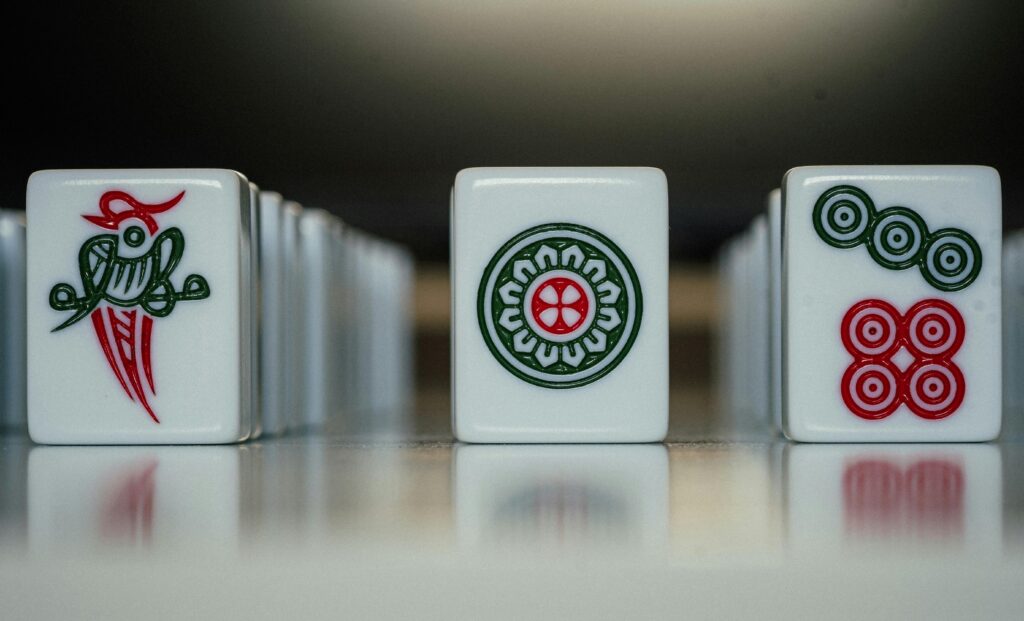
We spend our lives touching plastic screens and plastic keyboards. We are starved for tactile experiences. There is something deeply satisfying about Mahjong tiles. They are heavy. They are cool to the touch. The sound they make—that crisp snap when you discard a tile onto the table, or the rumbling crash when you “wash” the tiles to shuffle them—is incredibly pleasing.
It sounds silly, but the physical ritual of the game is part of the appeal. Building the wall, rolling the dice, stacking your rack. It is a fidget spinner for your soul. It occupies your hands, which helps lower anxiety.
When you host a Mahjong night, you aren’t just playing a game; you are engaging in a sensory ritual. It feels classy. It feels substantial, and it elevates the evening from hanging out to an event.
It’s a Timeless Game
Video games go out of style, and trivia nights get repetitive. On the other hand, Mahjong is a timeless game. The rules are complex enough that you never truly master them, which means the game grows with your friend group. The way you play in year one will be different from how you play in year ten. You develop shorthand. You develop inside jokes about specific tiles (everyone has that one tile they seem to be cursed by).
Because the game is played in rounds, it is also flexible. You can play a quick four rounds in 45 minutes, or you can play four full winds that last all night. It fits into whatever time window your adult lives allow.
The “Third Place” You Can Build at Home
Sociologists talk about the loss of the “third place”—a spot that isn’t work and isn’t home, where communities gather. Mahjong creates a portable third place.
When you invite friends over for Mahjong, you are creating a club. You can alternate houses and have a rotating snack assignment. It gives the group a schedule and a structure.
In a world where it is increasingly hard to pin people down for plans (“Let’s grab coffee sometime!” usually means “never”), having a standing Mahjong date is a powerful anchor. It’s easier to commit to “Mahjong Night” than a vague “hangout.” It gives people permission to prioritize the friendship.
A Friendship Built on Mahjong
We need more excuses to sit around a table and look at each other. We need more excuses to use our brains for something other than scrolling.
Mahjong offers a unique blend of strategy, luck, aesthetic beauty, and social rhythm that makes it the ideal activity for friends. It’s loud, it’s fun, and it’s just difficult enough to be rewarding. So, buy a set (or find a digital room), pour some tea (or wine), and start shuffling. You might find that the game isn’t just about matching tiles; it’s about matching schedules and keeping your circle close.