
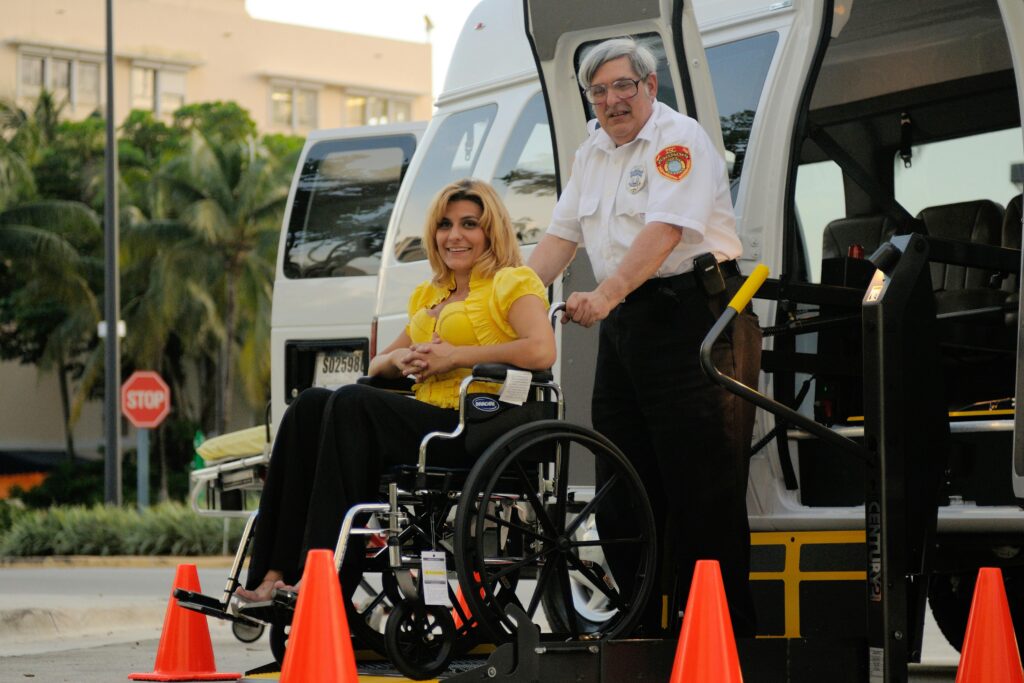
For most people, catching the bus or the subway is an afterthought. You grab your coat, check your phone to see when the next train is coming, and walk out the door. If you miss it, it’s not a big deal—another one is usually coming in fifteen minutes. But if you use a wheelchair, rely on a walker, or manage a condition that limits your physical mobility, that casual spontaneity doesn’t exist.
Public transit isn’t just a ride; it is a high-stakes obstacle course. You aren’t just looking at the timetable. You are wondering if the bus driver will actually take the time to lower the ramp today. You are praying that the single elevator at your transfer station hasn’t been taped off with an “Out of Order” sign again.
This exhausting, daily unpredictability is exactly why so many people and their caregivers are finally throwing their hands up and booking a private accessible transportation service instead. It is about taking back your time and your dignity.Let’s talk honestly about what it is actually like to navigate the city transit system when you have mobility issues, and why the current setup is failing the people who need it most.
The “Out of Order” Trap
If you live in a city with a subway or elevated light rail, you already know that elevators are your lifeline. You also know they are notoriously unreliable.
Imagine planning your route perfectly. You give yourself plenty of extra time, you make it onto the train, and you arrive at your stop. But when you roll up to the elevator to get up to the street level, the doors are locked, and the lights are off.
You are literally trapped. You obviously can’t carry a power chair up three flights of concrete stairs. Your only option is to get back on the next train, ride several stops out of your way to a station with a working elevator, and then try to wheel yourself miles back to your original destination. What should have been a simple twenty-minute trip to the dentist turns into a massive two-hour ordeal.
The Heartbreak of the No Empty Seats
City buses come with very strict limits. Because of space constraints, most standard buses only have two designated tie-down spots for wheelchairs.
Picture this: you are waiting at a bus stop in the freezing cold. The bus finally pulls up, but you look through the window and see that those two spots are already taken. Sometimes they are taken by other wheelchair users. Other times, they are blocked by passengers who refuse to fold up their shopping carts or massive strollers.
The driver looks at you, shrugs, closes the doors, and drives away. You get left on the sidewalk. You have to wait for the next bus, just hoping there is room. It is a frustrating occurrence that forces individuals with disabilities to leave their homes hours early just to guarantee they won’t miss their appointments.
The Heavy Weight of Impatient Sighs
Then there is the emotional toll, which is often harder to deal with than the physical barriers. When someone using a mobility device boards a bus, the process takes a few minutes. The driver has to physically lower the ramp, wait for the passenger to maneuver inside, flip up the designated seating, and strap the chair to the floor using a multi-point tie-down system to keep it safe.
During those three or four minutes, the bus isn’t moving. Commuters who are running late for work often sigh loudly. They check their watches. They stare. As the passenger, you spend the entire ride feeling like a burden, silently apologizing to a bus full of strangers simply for taking up space. It is a dehumanizing feeling that nobody should have to endure just to get to the grocery store.
The Sidewalk Gap
Transit systems only take you from stop to stop. They don’t actually take you to your front door. Getting from the bus stop to the clinic entrance is entirely up to you.
If your neighborhood has missing curb cuts, cracked sidewalks, or intersections without proper crosswalks, that quarter-mile stretch can be dangerous or downright impassable. Throw in some bad winter weather—like a city plow pushing a pile of slush onto the street corner—and a manual wheelchair is completely stuck. A bus ride means very little if you can’t physically cross the street once you get off.
Why City Paratransit Often Falls Short
A lot of cities try to fix this by offering specialized paratransit vans. These are a step in the right direction, but they come with massive limitations.
Most city-run programs operate strictly on a “curb-to-curb” basis. The driver pulls up to your curb, honks the horn, and waits. If you need a steady arm to lean on while walking down your icy porch steps, or if you need someone to guide you through the confusing lobby of a massive hospital, they aren’t allowed to help. Furthermore, you usually have to book these rides days in advance, and they have notoriously wide pickup windows that leave you waiting outside for an hour.
Finding a Better Way
Public transit is supposed to be the great equalizer, but the reality is that it is still largely built for the able-bodied. You shouldn’t have to map out a military-grade logistics plan just to pick up a prescription.
Shifting to a private, door-to-door transit service completely removes this anxiety. It means getting a professional driver who actually walks up to your door, helps you navigate the steps, secures your equipment safely, and walks you right to the receptionist’s desk. It trades the stress and embarrassment of the city bus for the reliability and respect you deserve.