
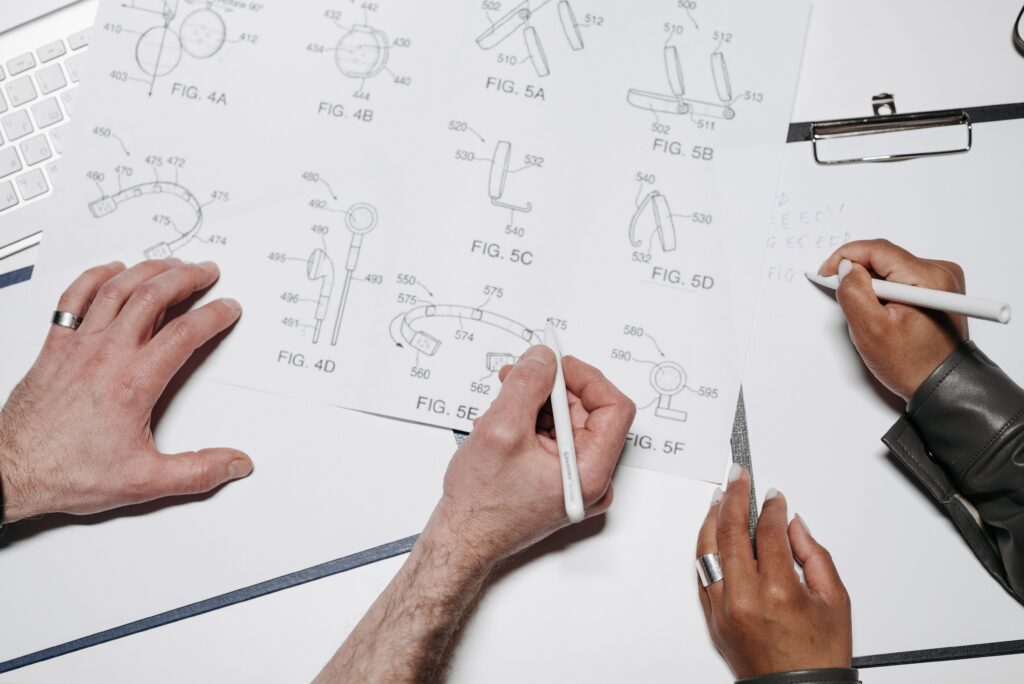

The first question an inventor should ask is not “how do I patent this?” It is “has someone already done it?” That answer shapes every decision that follows, from whether to file at all to how a product gets positioned. We put the question to Trevor Lambert, a veteran of the product development field who co-owns Enhance Innovations, an invention design firm founded in 2010 in Champlin, Minnesota.
Start with what already exists
“People come to me with a finished idea in their head and a budget ready to go,” Lambert says. “My first reply is almost always a question back. What is already out there that does part of this job? Until you know that, you are guessing about whether your idea is even open ground.”
A patent search is the practical form of that question. The United States Patent and Trademark Office maintains public databases that show what has been filed and granted. The agency’s own patent search resources are the starting reference, and a professional search reads them with an eye for claims, not just pictures.
“A search is not about killing an idea,” Lambert says. “It is about learning where your idea sits. Sometimes a close result tells you the real opening is a feature nobody covered. That is useful before you spend on design, not after.”
Why the order matters
Lambert is direct about sequence. “If you build renderings and a CAD model first, then find a blocking patent, you paid for work you cannot use as planned. Run the search first. It is the cheapest step and it informs the expensive ones.”
The economics support the caution. The U.S. Small Business Administration’s Office of Advocacy reports that small businesses make up 99.9 percent of American firms, which means most inventors are working from personal savings rather than a corporate research budget. You can read the Office of Advocacy’s data on the SBA website. With limited capital, the order of spending decides how far the money goes.
The second question hides inside the first
Once an inventor knows the field, a quieter question appears: who would actually buy this, and who already makes products like it? “Design and market are the same conversation,” Lambert says. “I want to know the buyer and the shelf before I sketch anything. A product that ignores the buyer is a hobby.”
This is where Lambert argues for keeping the work under one roof. Enhance handles industrial design, engineering, renderings, marketing materials, and licensing representation as one team rather than as separate vendors handing files back and forth. “When the designer, the engineer, and the person who knows the licensing side sit together, the search result actually changes the design. Split those people across three contractors and that feedback gets lost in email.”
What a search does not promise
Lambert is careful about expectations. “A clean search does not mean a patent will issue, and it does not mean a company will license the product. It means you are not walking into a wall you could have seen. That is all it promises, and that is worth a lot.”
He points inventors toward primary sources before they hire anyone. The USPTO’s patent basics pages explain the difference between utility and design protection in plain terms. “Read the government material first,” he says. “It is free and it is accurate. Then a professional search saves you the time of reading ten thousand results yourself.”
The honest version of step one
Lambert’s framing avoids the hype that surrounds invention help. He does not promise a payday. He promises information. “The first question is humbling on purpose,” he says. “You find out fast whether you are first, whether you are second, or whether you found a gap. All three are workable. Not knowing is the only bad position.”
For inventors weighing where to begin, his advice reduces to one move. Answer the existence question before any design budget is committed. Enhance built its process around that order over the past 16 years, and Lambert says it has not changed. “Search, then design, then decide how to protect and pitch it. People who skip the first step pay for it later. People who respect it tend to spend smarter the whole way through.”
This article is educational and is not legal or financial advice. Inventors should do their own research and consult qualified professionals for their specific situation.