
Key Takeaways
- Start with fit, not features: the best custom electric wheelchairs are prescribed around seat width, seat depth, pressure support, and control access long before anyone talks about speed, style, or brand names.
- Compare drive base and home layout together, because a power wheelchair that handles tight hallways well may behave very differently on thresholds, ramps, and rougher outdoor terrain.
- Question folding and lightweight claims carefully: portable electric wheelchairs can help with transport, but they often give up seating adjustment and comfort options found on standard custom power wheelchairs.
- Review cost in layers, not just sticker price, since custom electric wheelchairs can change quickly in price based on seating, tilt, recline, elevating leg supports, batteries, and control setup.
- Ask how the wheelchair will work six months from now, especially for changing physical needs, because a custom build that feels basic today can become a poor fit fast for fatigue, pain, or weaker hand control.
- Watch the first 30 days closely: a well-matched custom electric wheelchair should reduce pain, improve posture, make daily transport easier, and cut down the small positioning problems that turn into bigger comfort issues.
Bad wheelchair fit shows up fast—sometimes in 72 hours. A sore tailbone, numb thighs, a shoulder that starts barking after every transfer, a parent who suddenly “doesn’t want to go out” anymore. That’s often where the real conversation starts around custom electric wheelchairs, not with speed, color, or brand names. In practice, rehab teams don’t treat comfort as a soft extra; they treat it as a safety issue, because poor positioning can trigger pain, skin trouble, fatigue, and a sharp drop in daily activity.
And families are paying closer attention now. Adult children who once focused on whether a chair was portable or folding are asking tougher questions—Will the joystick placement work if hand strength changes? Can the seat support a full afternoon without pressure buildup? Will the drive base handle tight hallways at home but still manage parking lots and uneven terrain? The honest answer is that a standard power wheelchair often falls short. Comfort isn’t just about padding. It’s about fit, posture, access, and how the chair works in real life, day after day.
Why custom electric wheelchairs are getting closer scrutiny right now
Is a standard power chair still good enough for an aging parent whose body, stamina, and posture keep changing? The honest answer is: often, no. Rehab teams are looking harder at custom electric wheelchairs because a basic setup that works in month one can start causing pain, sliding, shoulder strain, or poor joystick access by month six.
The comfort problem behind standard power wheelchair setups
Too often, standard power wheelchair setups come with fixed dimensions and limited support. Seat depth, back angle, cushion type, and electric wheelchair seat width options affect pressure, breathing, and transfer safety—especially for someone using the wheelchair four to eight hours a day.
- Watch for: leaning to one side
- Check: foot support and hip position
- Ask: whether pain starts after 30-60 minutes
Why adult children and caregivers are pushing for more adjustable seating and controls
Families are asking better questions now. They want customized electric wheelchair options that match real routines, not showroom demos, and they’re paying close attention to power chair joystick options when arthritis, tremor, or one-sided weakness makes standard controls hard to manage.
In practice, a personalized motorized wheelchair can mean a swing-away joystick, a narrower drive base for apartment turns, or a cushion change that stops daily skin irritation. Small adjustments matter. A lot.
Where custom electric wheelchairs fit between lightweight folding models and full-time complex rehab chairs
Not every user needs a heavy complex rehab build—and not every travel-friendly folding wheelchair or scooter will hold up for daily support needs. The smart middle ground is often a tailored wheelchair for mobility needs: more adjustable than portable transport models, less involved than a full bariatric or rehab system, but built for real comfort and safer everyday use.
What rehab specialists evaluate first in a custom electric wheelchair assessment
Fit comes first.
Families often compare speed, folding features, or whether a chair looks less clinical, but a rehab assessment starts somewhere less exciting and far more important: the body. For custom electric wheelchairs, the first pass is always pressure, posture, and how the person sits after 20 minutes—not how the chair looks in a product photo.
Seat width, seat depth, and pressure support before speed or style
A chair that’s 1 inch too wide can push the user off midline, and 2 inches too deep can press behind the knees and raise skin risk. That’s why clinicians review electric wheelchair seat width options before talking about motor speed, travel range, or compact transport features. This is where customized electric wheelchair options actually start to matter.
Armrest height, footplate angle, and head support that affect pain within days
Small setup errors show up fast. Armrests set too high shrug the shoulders; footplates set wrong can tilt the pelvis; weak head support leads to neck pain within days—sometimes sooner. A personalized motorized wheelchair should reduce strain, not add it.
Joystick placement, drive control access, and fatigue management for changing physical needs
Control matters. Rehab teams test power chair joystick options, hand dominance, tremor, and reach so the user can drive without burning through energy in 15 minutes. For progressive weakness, this part often decides whether a standard power setup will work at all.
Most guides gloss over this. Don’t.
Indoor turning radius, transport needs, and terrain limits that shape the final prescription
Then comes real-life use:
- Turning radius for bathrooms and tight halls
- Portable or lightweight needs for car transport
- Drive stability on uneven terrain
- Lift and storage limits for caregivers
That’s how a tailored wheelchair for mobility needs gets prescribed—in practice, function beats style every time.
Which custom electric wheelchair features actually improve comfort at home and on the go
Comfort problems usually come from the wrong base, seat, or positioning system—not the brand name.
- Start with pressure relief. A personalized motorized wheelchair should offer tilt, recline, or elevating legs when sitting time stretches past 2 hours.
- Match the drive base to the home. Hallways, thresholds, and turning space decide whether center, front, or rear drive works best.
- Check transport reality. A folding, lightweight chair may fit the car better, but a standard custom power setup often gives stronger seating and better posture support.
- Plan a backup. For some families, a manual chair, scooter, or transporter covers short trips better than one all-purpose power build.
Power tilt, recline, and elevating leg options for pressure relief and posture changes
Power tilt changes weight distribution.
Recline opens the hip angle. Elevating legs help with swelling and positioning (especially after long medical visits or travel days). Rehab teams usually check whether the user can tolerate 30 to 45 minutes in one position before adding these functions to custom electric wheelchairs.
Center, front, and rear drive bases for tight hallways, thresholds, and outdoor travel
Center drive turns tight — suits compact homes. Front drive handles thresholds well. Rear drive tracks straighter outdoors on uneven terrain. The honest answer is simple: the best tailored wheelchair for mobility needs depends more on daily route patterns than showroom feel.
Folding and portable power wheelchair tradeoffs versus standard custom power wheelchairs
Customized electric wheelchair options now include folding travel models, but they usually offer fewer seating changes, less lift support, and more limited seat depth adjustments. Families comparing electric wheelchair seat width options should measure hips, winter clothing, and transfer space—not guess.
Think about what that means for your situation.
When a hybrid setup, scooter, transporter, or manual backup chair makes more sense
Some users do better with two tools. A standard power wheelchair at home, plus a portable backup for transport. Others need power chair joystick options that switch sides as weakness changes—which happens more often than buyers expect.
How families compare custom electric wheelchairs before they buy
Nearly 3 out of 4 families start with weight and price, then realize comfort drives daily use. That mismatch is why custom electric wheelchairs get ruled out too early—or picked for the wrong reasons. In practice, rehab teams compare fit first: seat depth, back support, tilt needs, and electric wheelchair seat width options that prevent hip pressure and sliding.
How much custom power wheelchairs cost and what changes the price
Base pricing for a standard power chair may start in the low thousands, but a tailored wheelchair for mobility needs climbs fast once seating, battery range, suspension, and drive controls change. Add-ons that move cost most:
- Power tilt or recline
- Pressure-relief cushions
- Compact or bariatric frame types
- Alternate drive and power chair joystick options
Medicare, private insurance, and out-of-pocket gaps families run into
Coverage usually pays for medical need, not every comfort feature a family wants for travel, folding transport, or mixed terrain. That’s where out-of-pocket gaps show up—especially for portable or lightweight models, upgraded seating packages, and some customized electric wheelchair options.
Used, cheap, and lightest electric wheelchair claims that need a closer look
Cheap isn’t always cheaper. A used chair with worn batteries, old electronics, or limited seat adjustability can cost more within 6 to 12 months. And the lightest build may sacrifice stability, motor strength, or support for a growing condition.
Questions caregivers should ask before choosing brands, motors, batteries, and seating packages
Before buying, families should ask:
Simple idea. Harder to get right than it sounds.
- Will this personalized motorized wheelchair still fit if transfers get harder?
- Is the battery removable for travel?
- Does the chair support indoor turning and outdoor drive needs?
- Can the seating package adapt without a full rebuild?
The prescription process for custom electric wheelchairs and the mistakes that cause bad fit
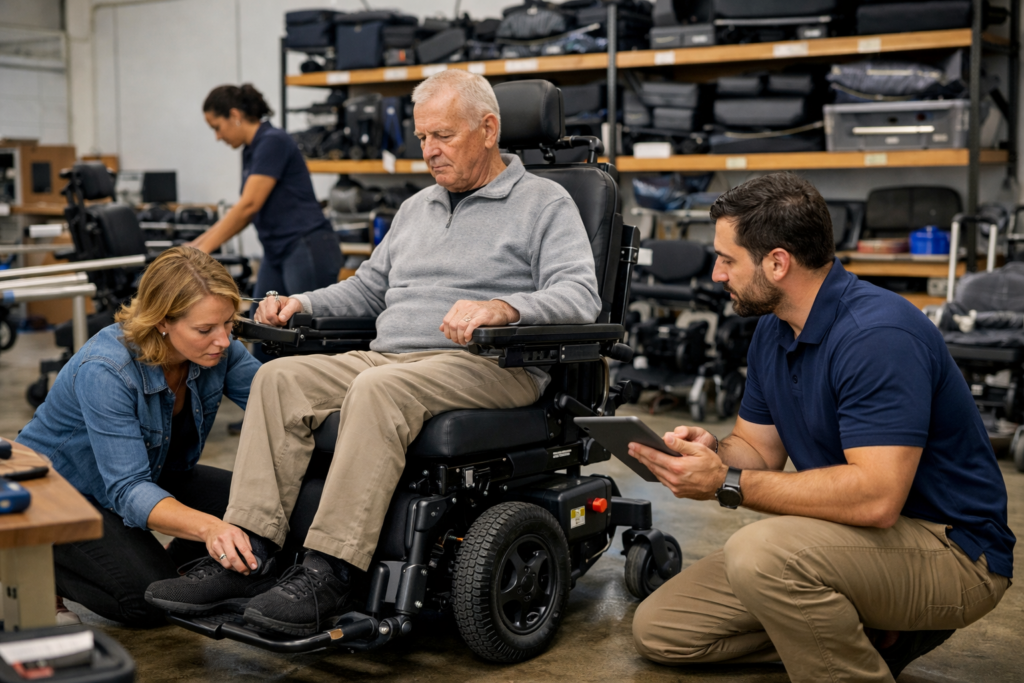
Think of this like a seating appointment explained over coffee: the best custom electric wheelchairs aren’t picked from a catalog, they’re built from how a person sits, transfers, drives, and gets through a normal Tuesday. In practice, bad fit usually starts when families shop specs first and body support second.
What happens during the seating clinic or ATP evaluation
At a seating clinic, the rehab team checks posture, pelvic position, skin risk, trunk control, leg length, reach, and how the user manages a power chair joystick options setup. They’ll test electric wheelchair seat width options, back support, cushion shape, and sometimes drive style—mid-wheel, front-wheel, or rear-wheel—because a tight apartment and uneven outdoor terrain don’t ask the same thing from a motorized chair.
Why home measurements, vehicle transport plans, and daily routines matter as much as specs
Here’s what most people miss: doorway width, bed height, bathroom turns, and whether the chair must be portable or folding can matter more than brochure claims. A family comparing customized electric wheelchair options should bring home measurements, vehicle cargo opening dimensions, and a real list of weekly trips.
Red flags that a power wheelchair build is too basic for a progressive condition
- No tilt, recline, or elevating leg support despite fatigue or swelling
- Minimal growth room in a personalized motorized wheelchair setup
- Standard controls when hand strength is already changing
What a well-matched custom electric wheelchair should solve in the first 30 days
A tailored wheelchair for mobility needs should reduce pushing fatigue, improve sitting tolerance to 4 to 6 hours, and make transfers calmer—not harder. If the user avoids the chair after week two, something’s off — and it usually isn’t just comfort.
Frequently Asked Questions
How much does a custom power wheelchair cost?
Custom electric wheelchairs can range from about $2,500 for a basic portable or folding model to $15,000 or more for a fully configured power chair with seating, tilt, recline, elevating leg rests, and specialty drive controls. The honest answer is that price climbs fast once a chair is built around posture support, pressure relief, and long daily use. For families comparing options, the biggest cost drivers are seating systems, electronics, battery size, and whether the chair is meant for travel or full-time use.
Can you get a wheelchair for fibromyalgia?
Yes, and for some people it makes very good sense. Fibromyalgia can cause pain, fatigue, and activity crashes that make walking unreliable, so a lightweight manual wheelchair, scooter, or custom power wheelchair may help conserve energy for the parts of life that matter more than getting from the parking lot to the waiting room. A clinician should match the chair to the person’s actual limits, not just the diagnosis.
Does Medicare pay for a custom wheelchair?
Sometimes, but families should expect limits. Medicare may cover a power wheelchair or other mobility equipment if it is medically necessary for use inside the home and prescribed after a clinical evaluation, but it doesn’t automatically pay for every custom feature people want for travel, compact folding, or easier transport. That gap is where a lot of frustration starts.
What kind of wheelchair is best for spina bifida?
It depends on strength, trunk control, skin risk, and how the chair will be used day to day. Some people do well with a custom manual wheelchair, while others need a motorized power chair with tilt, pressure management, and precise positioning to protect the hips and spine. For spina bifida, fit matters more than brand names—bad seat depth or poor pelvic support can create problems fast.
Sounds minor. It isn’t.
Are custom electric wheelchairs better than standard power wheelchairs?
For full-time users or anyone with changing physical needs, yes—this approach works better. A standard power wheelchair may handle basic transport, but a custom electric wheelchair can be built around seat width, back support, joystick placement, leg positioning, and drive performance for the user’s body and routine. That usually means better comfort, safer posture, and less caregiver strain.
What’s the difference between a folding power wheelchair and a custom power chair?
A folding power wheelchair is usually built for portability first: compact frame, lighter weight, easy travel, quick transport in a car trunk. A custom power chair is built for clinical fit and daily function first—sometimes with heavier seating systems, stronger drive bases, and more adjustment. Some families want both ideas in one chair, but in practice there’s usually a tradeoff.
How do families know if a parent needs a power chair instead of a manual wheelchair?
Start with one blunt question: can the person safely and consistently self-propel a manual wheelchair without pain, exhaustion, or shoulder strain? If the answer is no, a power option may be the safer call, especially for progressive weakness, poor endurance, or repeated falls during longer outings. Caregivers miss this all the time—if the chair only works because someone else is pushing, it isn’t really independent mobility.
Can custom electric wheelchairs be used for travel?
Some can, but not all. Travel-friendly models tend to be folding, portable, and lighter, with removable batteries and a compact frame that fits standard vehicle storage better than a full-size rehab power chair. Before buying, families should check total chair weight, folded dimensions, turning radius, and battery rules for air travel (that detail trips people up a lot).
What features matter most when choosing custom electric wheelchairs for an aging parent?
Focus on the features that affect daily use, not the flashy extras. Seat width and depth, cushion quality, transfer-friendly armrests, joystick access, turning radius, battery range, weight capacity, and the chair’s ability to handle indoor floors and outdoor terrain matter far more than a long list of add-ons. If the parent’s needs are changing, adjustable seating and a frame that won’t be outgrown in six months should move to the top of the list.
Should you buy a used custom electric wheelchair?
Usually, only with caution. A used power wheelchair can look like a bargain, but batteries, electronics, cushions, — fit issues often turn cheap into expensive—fast. If the chair was originally custom-built for someone else, there’s a real chance the seat dimensions, support angles, or controls won’t suit the new user at all.
This is the part people underestimate.
The chair itself isn’t the starting point. Fit is. A rehab specialist will usually care more about seat depth, arm support, joystick access, and pressure relief than top speed or a polished spec sheet, because those early details decide whether a parent can sit comfortably for two hours or starts hurting by day three. And for families weighing custom electric wheelchairs, that distinction matters more right now, as changing physical needs push more households beyond basic power models but not always into the most complex rehab builds.
Comfort also has to survive real life — narrow hallways, vehicle loading, uneven parking lots, fatigue late in the day, — the small transfer problems that don’t show up in a showroom. That’s where the right combination of tilt, recline, drive base, portable design, or even a backup chair can save months of frustration (and expensive changes later). Poor matches usually happen when buyers focus on claims like lightest, cheapest, or fastest before checking posture, home setup, and daily routine.
The next move should be practical: gather home doorway measurements, vehicle cargo dimensions, a list of pain points during sitting and transfers, and schedule a seating evaluation with those notes in hand. That prep gives the clinician something useful to prescribe from — and gives the family a far better shot at getting it right the first time.
For more great reading, visit our site and explore related topics.