
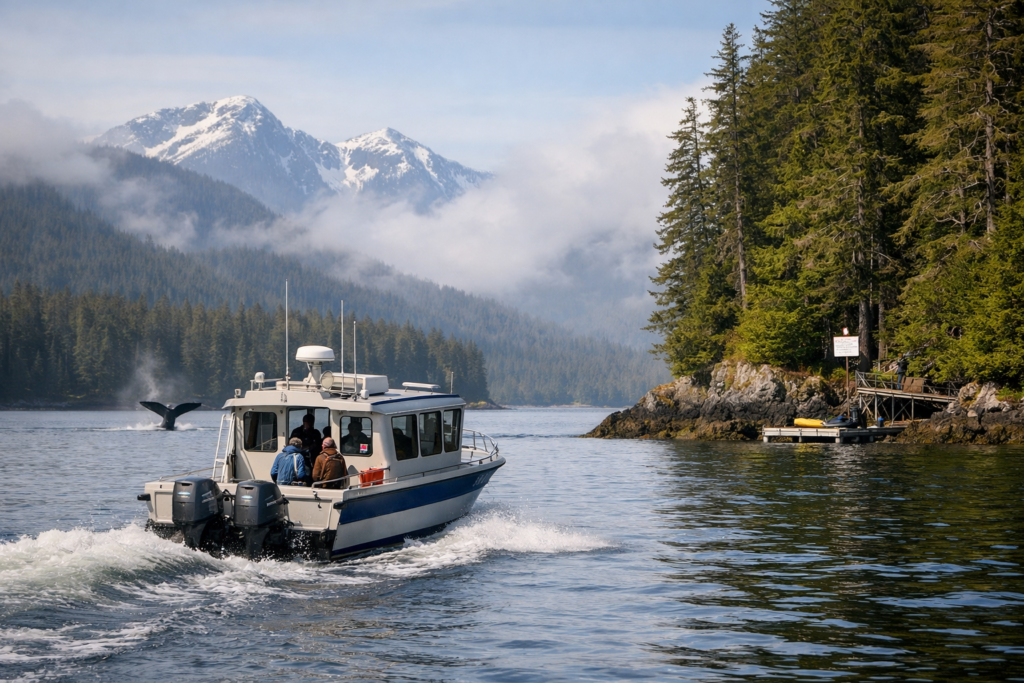
Key Takeaways
- Confirm the Whale Pass water taxi service departure point, loading zone, and return window before paying the fare; missed pickups and fuzzy timing cause the biggest trip problems.
- Check the boat’s hull design, cabin cover, and bathroom setup if the ride matters to you, because rough water changes how a short hop feels fast.
- Ask how freight, coolers, hunting gear, and kayaks are handled, since a good water taxi service should spell out weight, loading, and any extra cost up front.
- Compare price and reliability, not just the lowest cost; for remote island travel, one late boat can cost a full day.
- Verify license and crew experience for any private water taxi or shared service, especially if your trip involves cabins, weather swings, or multiple stops.
- Plan around ferry schedules, airport connections, and tide changes if your Whale Pass water taxi links to other Southeast Alaska communities, because the cleanest route isn’t always the fastest on paper.
A missed boat in Southeast Alaska can turn a perfect trip into a very expensive lesson. For couples and independent travelers looking at Whale Pass water taxi service, the real issue isn’t just price — it’s whether the ride shows up on time, handles gear without drama, and feels decent when the water gets choppy.
That’s why the smartest bookers don’t shop by fare alone. They ask about the hull, the loading zone, the crew’s local experience, and what happens when weather shifts the schedule two hours before departure. Ferry timetables sound tidy on paper. Real travel rarely is.
The honest answer is simple: a good water taxi should feel boring in the best way. No confusion. No scrambling at the dock. No guessing whether the operator can move people, coolers, or cabin gear without turning the day into a mess.
Why Whale Pass water taxi service matters for independent travelers and couples
A couple books a cabin stay, packs too much gear, and then learns the ferry schedule won’t match their check-in window. That’s the trap. A Whale Pass water taxi service exists to fix that gap with direct water transport, a set fare, and a boat that isn’t waiting on a larger city port.
The fast route from a harbor town to remote island stops
For travelers comparing taxi, ferry, — private boat options, the real question is time. A good Whale Pass boat taxi cuts the split between dock and destination to one ride, not two or three transfers, and that matters when weather turns or a dinner reservation’s tied to arrival. It also helps that Whale Pass Alaska water transportation is usually built around luggage, coolers, and cabin freight, not just people.
Why small-group boat service beats trying to piece together a ferry schedule
Independent travelers don’t need a portsmouth-style terminal shuffle or a dover-to-split timetable that eats half the day. They need a direct hull, a clear price, and one operator who’ll say what the ride will really feel like. Even a private fare can make sense here if two people are carrying fishing gear, food, or extra bags.
What a good operator should explain before you pay the fare
Before booking Whale Pass cabin transport, the operator should spell out loading help, departure timing, and whether airport pickup is possible. Ask about license status, weather limits, and what happens if the boat has to reroute. That’s the part most travelers miss. Not the price.
The difference shows up fast.
- Ask for the total cost, not just the base fare.
- Confirm freight limits for stoves, coolers, and boxes.
- Get the pickup point in writing if the plan changes.
What to check before you book a Whale Pass water taxi from Wrangell
Who wants a surprise at the dock? Nobody, especially not on a Whale Pass water taxi service where the difference between a smooth run and a long day usually comes down to three things: where the boat leaves, what kind of hull shows up, and whether the crew can handle freight without fuss. The honest answer is that the best trips feel boring in the right way. They’re organized. They leave on time. They don’t make passengers guess.
Departure point, loading zone, and how the day really starts
The Whale Pass boat taxi should start with a clear meeting point and a clean loading plan. For a Wrangell to Whale Pass water taxi, ask where bags, coolers, and gear get staged, and whether the crew wants help loading at the dock and destination. That sounds small. It isn’t.
A good operator treats Whale Pass Alaska water transportation like a ferry connection, not a casual boat ride. For island-to-island trips, timing matters more than a cheap fare. The best crews also spell out airport pickup options, freight handling, — whether the route is a straight shot or split around weather and tide.
Boat type, hull design, and why rough-water comfort matters
Hull design changes the whole ride. A catamaran usually tracks steadier than a narrow hull, which helps on west wind days when the water turns choppy. Travelers who’ve ridden water taxis from Naples, Dover, Trogir, or Cairnryan know the same rule applies everywhere: the boat matters more than the price tag.
Here’s what that actually means in practice.
For anyone booking Whale Pass cabin transport, the right question is simple: will the boat keep freight dry and people happy for the full run? That’s the test.
License, crew experience, and freight handling for gear-heavy trips
Check the license. Check the crew. Then check again. A reliable Whale Pass water taxi service should be able to explain how it handles gear, hunting loads, canoes, or a full week’s worth of cabin supplies without hand-waving. If the operator can’t explain the hull, the route, and the load plan in plain English, keep looking.
- Ask for the departure point in writing.
- Confirm freight weight and loading rules.
- Get the rough fare before you book.
That’s the part most travelers miss. Not the boat. The planning.
Whale Pass boat taxi
How Whale Pass pickup and drop-off usually work for cabins, guests, and gear
Short window. Tight margin. That’s the reality for a Whale Pass water taxi service, and the clock matters more than the fare on most trips.
A reliable Wrangell to Whale Pass water taxi usually runs on a fixed pickup window, then adjusts for tide swings, loading conditions, and dock access. For cabin guests, the crew wants a clear handoff point, a simple headcount, and gear staged before the boat arrives. No guessing. No extra wandering around the dock.
For travelers comparing a Whale Pass boat taxi with a ferry, the big difference is control: private boats can split loads, time arrivals around weather, and keep the route focused instead of chasing a city-to-city schedule like Portsmouth, Dover, or Newcastle transfers. A true Whale Pass Alaska water transportation run should also spell out the price, the license, and the gear limit up front. That’s the stuff that keeps a trip from turning messy.
Timing windows, tide swings, and why the clock matters
Departure times aren’t decorative. On a tide-sensitive route, a 20-minute delay can change the landing, the hull angle, and the whole unload. For cabin access, plan to be ready 30 minutes early, especially if the service is moving people from airport connections, split parties, or a last-minute island transfer.
No shortcuts here — this step actually counts.
What to expect for baggage, coolers, kayaks, and hunting equipment
Bring bags that stack cleanly, not loose pieces that roll underfoot. Coolers, fuel cans, and hunting gear need advance notice, and a Whale Pass cabin transport booking should mention kayaks, rifles, or oversized freight before the boat leaves. That keeps loading faster and safer.
When a private water taxi makes more sense than shared transport
If the group has mixed timing, wet gear, or a hard pickup deadline, private service wins. Shared runs can work for simple passenger moves, but a private taxi handles awkward freight, rough weather, and odd-hour departures without turning the day into a wait-and-see exercise.
Route planning for Whale Pass water taxi travelers heading to nearby Southeast Alaska communities
Roughly 7 out of 10 bad transfer days come from bad timing, not bad weather. That’s the part travelers miss with a Whale Pass water taxi service: the boat itself matters, but the route plan matters more. A smart operator reads tide windows, loading points, and the day’s sea state before anyone steps aboard.
Connections to island stops, cabin drop-offs, and remote ports
For island stops and cabin drops, a Whale Pass Alaska water transportation plan has to fit the gear, the hull, and the landing site. Travelers booking a Whale Pass boat taxi should ask about dock height, beach unloading, and whether the boat can handle coolers, hunting packs, or a last-minute airport transfer. The same goes for a Whale Pass cabin transport run. If the loading zone is tight, a landing-craft bow saves time and avoids the ugly scramble.
How operators handle weather, delayed departures, and re-routes
Real operators don’t pretend the ferry schedule works like a city bus. They split departures, move pickup windows, and reroute from the west side of an island when chop builds. That’s normal. What’s not normal is silence. A dependable Wrangell to Whale Pass water taxi operator should tell guests early if the hull needs to change, if a port call shifts, or if a cabin drop changes by an hour.
Why people compare price, cost, and reliability instead of chasing the lowest fare
Price gets attention. Reliability gets people home. Compare the fare against the cost of a missed ferry connection, a delayed glacier day, or a lost night in town. Travelers who’ve used boats from Naples, Dover, Portsmouth, Queenstown, Cairnryan, or Trogir already know this: the cheapest taxi isn’t always the one that works. It’s better to pay for the route that shows up, keeps the hull steady, and leaves room for weather to act like weather.
- Ask about the loading point before you book.
- Confirm whether the route can split by island stop or port.
- Get the departure window in writing.
- Check if the crew handles re-routing without drama.
That’s the difference between a water taxi and a headache.
Here’s what that actually means in practice.
Choosing the right Whale Pass water taxi service for your trip style
Write this section as if explaining to a smart friend over coffee — casual but accurate and specific. The best Whale Pass water taxi service isn’t the cheapest fare on paper; it’s the one that fits the way the trip actually unfolds. For couples, that usually means a steadier hull, a short loading window, and a crew that won’t turn a simple transfer into a long wait at the port.
The comfort-first choice for couples who want a smoother ride
A good Whale Pass boat taxi should feel calm enough for camera gear, day packs, and a jacket that stays dry. In practice, that means asking about covered seating, bathroom access, and how the boat handles west wind or split weather windows. If the operator can explain the price, route, and expected cost in plain terms, that’s a better sign than any glossy sales pitch.
The practical choice for travelers splitting time between ferry, airport, and boat access
For travelers mixing ferry, airport, and boat access, timing matters more than marketing. A Wrangell to Whale Pass water taxi run should match your connection, not the other way around. The same goes for Whale Pass Alaska water transportation: ask how they handle loading, whether baggage gets brought aboard first, and what happens if the departure shifts by an hour.
How to compare value across Alaska, Maine, Ireland, Queenstown, and other water taxi markets without getting distracted by the wrong details
People compare boat taxis the wrong way all the time. They look at ferry-style fare charts from Southampton, Naples, Trogir, Dover, Portsmouth, Cairnryan, Stranraer, Trinidad, Newcastle, York, Sicily, or even Sicamous and miss the real issue: local water, local hull, local license, and local timing. For remote trips, a Whale Pass cabin transport booking should be judged on reliability, not tourist-town habits.
Frequently Asked Questions
How much is a water taxi from USVI to BVI?
That route has nothing to do with a Whale Pass water taxi service, so the honest answer is: it’s the wrong comparison. It depends on distance, customs, and boat size.
For Southeast Alaska trips, pricing is route-based and weather-sensitive. A short hop won’t cost the same as a long cabin run or freight move.
How much is a private water taxi?
A private water taxi usually costs more than a shared seat because the boat, captain, and fuel are tied up for your group alone. On remote routes, price can swing fast based on passenger count, gear, distance, and whether the boat has to wait for tides or loading.
If someone asks for a straight number without the route, that’s a red flag. Real operators quote by trip, not by guesswork.
Is there a free water taxi in Fort Lauderdale?
No, and that question doesn’t map to a Whale Pass water taxi service anyway. In Alaska, remote water transport is a paid service because boats, fuel, maintenance, and crew time all cost real money.
It’s a small distinction with a big impact.
Free rides aren’t part of the model.
Not in isolated places, not when schedules matter.
How much is a water taxi in Alaska?
There isn’t one Alaska price. A short in-town crossing, a cabin drop-off, and a multi-stop route can all land in totally different brackets, from a modest fare to several hundred dollars per person or more.
For a Whale Pass water taxi service, the best way to think about cost is by mileage, passenger count, and loading needs. Gear, coolers, kayaks, and freight can change the fare.
How does a Whale Pass water taxi service compare with a ferry?
A ferry follows a fixed schedule and fixed stops.
A water taxi is the opposite: it’s point-to-point, direct, and built for places a ferry doesn’t serve.
That matters when a traveler needs to get from Wrangell to a cabin, a remote dock, or another community without burning a whole day. Faster. Less waiting. Less fuss.
It’s not the only factor, but it’s close.
Do water taxi fares change with weather and tides?
Yes, and anyone working these routes should expect that. Tides can affect access, and rough weather can change timing, routing, or whether a trip happens at all.
A fair operator talks plainly about that before booking. If the answer sounds too tidy, it probably isn’t real.
Can a water taxi take airport passengers or baggage?
Sometimes, yes. Some operators can arrange airport pickup or drop-off, but it has to be planned in advance so the crew knows how much room is needed for people and bags.
That’s doubly true on a Whale Pass water taxi service where gear can pile up fast. Coolers, duffels, and fishing or cabin supplies all take space.
What should travelers ask before booking a Whale Pass water taxi service?
Ask five things: departure point, baggage limits, exact fare, cancellation rules, and whether there’s room for freight or specialty gear. Those answers tell you more than a glossy photo ever will.
If the trip involves a cabin, a pick-up window, or a connection, ask how the crew handles delays. A good operator answers without dancing around it.
The short version: it matters a lot.
Is a water taxi service the same as a ferry or charter boat?
No. A ferry runs a public route, a charter boat is usually booked for an outing, and a water taxi service is transport first. That difference matters because you’re paying for time, access, and a direct run.
For remote Alaska travel, that direct run is often the whole point. It saves hours, sometimes more.
Where can travelers find reliable route information for Alaska water taxis?
Use official operator pages, route confirmations, and local marine resources before you book. The U.S. Coast Guard, NOAA marine forecasts, and park or forest service pages are worth checking too (especially if the trip depends on weather or a remote landing).
Don’t rely on old forum posts from 2023 or a random fare listed for Maine, Naples, or Venice. Different world. Different rules.
For travelers heading to Whale Pass, the booking decision usually comes down to three things: how the boat handles rougher water, how clearly the pickup is explained, and whether the operator treats luggage and freight like part of the trip, not an afterthought. Those details sound small. They’re not. They’re the difference between a clean arrival and a long, cold wait with gear spread across a dock.
Couples and independent travelers usually do best with operators who spell out the departure point, loading routine, and any timing changes before anyone pays a fare. The smartest choice isn’t the cheapest line on the page. It’s the one that gives a straight answer about comfort, weather, and what happens if plans shift halfway through the day.
Anyone comparing Whale Pass water taxi service options should confirm those basics first, then book the route that matches the trip they actually want. Ask about the loading zone, boat setup, and freight limits before locking it in.
For more great reading, visit our site and explore related topics.