
Key Takeaways
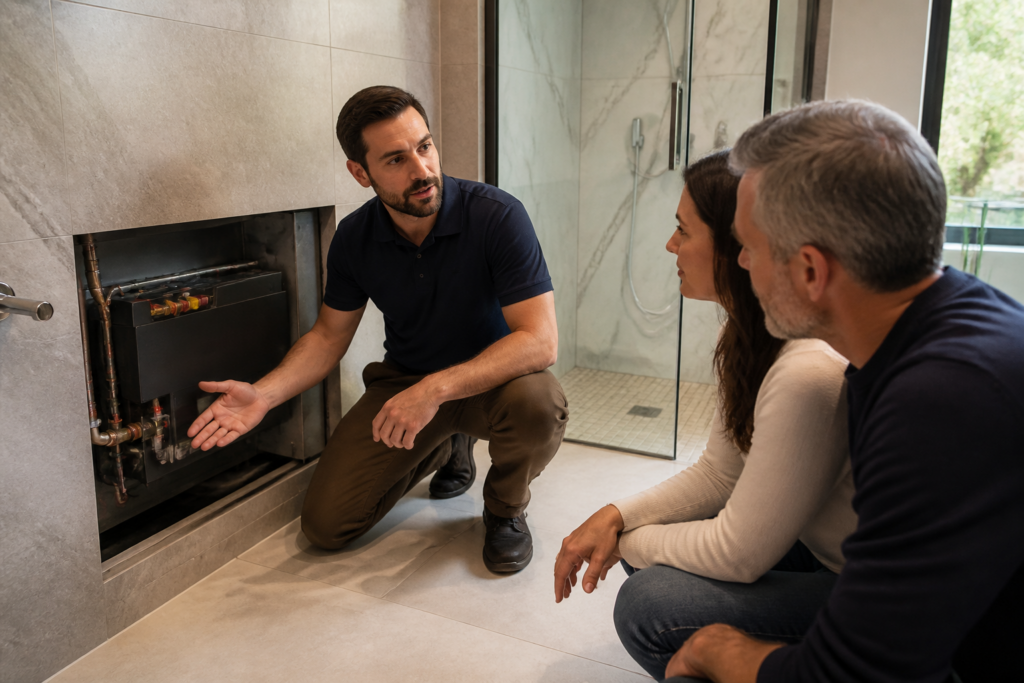
- Measure the shower before buying a 9kw steam bath generator—9kW usually fits a mid-size steam shower, but ceiling height, bench depth, and glass area can change the answer fast.
- Check materials early, because tile, marble, stone, and big glass panels can make a 9kw steam bath generator feel too small even when the cubic feet look right on paper.
- Confirm the electrical plan for a 9kw steam bath generator now, not after ordering—most setups need a dedicated 240V circuit, the right breaker size, and enough room near the shower for proper service access.
- Prioritize performance details over flashy add-ons when comparing a 9kw steam bath generator; auto-drain, scale control, quiet operation, and replacement part access matter more than mist or extra control gimmicks.
- Use a real sizing example for your home shower instead of trusting a generic chart, because a 9kw steam bath generator that works in one house can miss the mark in another with the same floor size.
- Ask the installer three blunt questions before purchase: Is 9kW enough for this shower, where will the generator and hose go, and what build details could push this steam shower past a 9kw steam bath generator?
One wrong sizing choice can turn a dream steam shower into a daily annoyance. That’s why the 9kw steam bath generator keeps coming up in 2026 bathroom remodel conversations—it’s often the tipping point between a shower that fills fast and one that never quite gets there. Buyers see “mid-size” and assume the answer is simple. It isn’t. In practice, two showers with the same footprint can need very different generator power once glass walls, stone tile, tall ceilings, or an outside wall enter the picture.
And that’s exactly where people get burned. A 9kW unit can be the right fit for a primary house shower, but only if the math matches the materials—and the materials matter more than most shoppers think. The honest answer is that sizing still gets treated like a spec-sheet shortcut, even though warm-up time, quiet operation, water delivery, and replacement part access all affect how the system feels once it’s installed (and paid for). So before anyone clicks buy, the shower itself has to tell the truth.
Why a 9kw steam bath generator is getting more attention in 2026
A couple midway through a primary bath remodel signs off on tile, glass, and a new shower tray—then hits the same snag that keeps showing up in 2026: steam sizing. They don’t want a portable mist machine feel. They want a quiet, whole shower steam experience at home, and they don’t want to overspend on power they’ll never use.
Bathroom remodel budgets are shifting toward in-home steam shower upgrades
More remodel budgets now carve out room for steam because buyers are skipping add-ons that feel decorative and putting money into daily-use features instead. A 9kw steam bath generator keeps showing up in that conversation because it fits the house plans of owners building a serious steam shower without jumping into oversized equipment.
In practice, three budget shifts stand out:
- Less spend on novelty tech
- More spend on wellness upgrades
- Tighter focus on equipment that fits the shower volume
Why 9kW sits in the sweet spot for a mid-size steam shower
For a mid-size enclosure, 9kW often lands in the right range—strong enough for steady steam, not so large that the generator feels mismatched to the room. That’s especially true if the shower uses standard tile and glass instead of thick stone (which pulls more heat).
A steam spa steam generator in this class usually makes sense for roughly 75 to 150 cubic feet. That’s the zone buyers keep landing in.
What buyers are getting wrong by treating generator size like a simple box-check
Bluntly, size charts get abused. Buyers look at cubic feet, check one box, and move on—without factoring ceiling height, glass area, hose run, water conditions, or cold outside walls. Then the steam feels weak. Or slow.
And that’s the mistake. A 9kW unit can be exactly right—or completely wrong—based on materials, not just raw dimensions. Would anyone size a washer or powered house standby unit by floor area alone? Of course not.
How to tell if a 9kw steam bath generator fits your shower size
Size decides everything. A 9kw steam bath generator usually fits a mid-size primary shower, not a tiny one and not a large stone steam room. In practice, the rough target is volume first, then materials, then wall exposure. For buyers comparing a 9kw steam sauna bath generator, that order matters more than brand names, power claims, or a flashy control machine.
The cubic-foot range where a 9kw steam bath generator usually works best
A 9kW unit often works best in the 75 to 150 cubic foot range. That means length × width × height. A 5′ x 4′ shower with an 8′ ceiling lands at 160 cubic feet—already near the upper edge, — maybe past it if the room uses glass.
- Best fit: about 90 to 130 cubic feet
- Borderline: 140 to 150 cubic feet
- Too small to justify: under 70 cubic feet
How ceiling height changes 9kW steam generator sizing
Height changes the math fast. An extra foot across a 5′ x 4′ footprint adds 20 cubic feet—which is enough to move a shower from safe to borderline. And steam rises, so taller ceilings need more power and more warm-up time.
Why glass, stone, marble, and exterior walls can push a shower past 9kW
Materials soak up heat. Glass, marble, stone, and an exterior wall can push a 9kw steam bath generator past its comfort zone—especially in a house where the bathroom sits on a colder outside wall. Quiet operation won’t help if the generator is undersized. It just won’t keep up.
A quick sizing example for a primary bathroom steam shower
Take a 4′ x 5′ shower with an 8′ ceiling. That’s 160 cubic feet. Add a full glass door, marble walls, and one exterior wall—and that 9kW pick starts to look light. Realistically, this approach works better:
- Measure cubic feet
- Add 20% to 30% for heat-hungry finishes
- Recheck before buying
The 2026 buyer’s checklist for a 9kw steam bath generator before purchase
Is the shower actually ready for a 9kw steam bath generator—or is the generator being asked to fix a weak room build? Buyers comparing 9kw steam bath generators should check the room first, because power alone won’t overcome a glass-heavy shower, loose door seal, or poor wall insulation.
Electrical needs: power, breaker size, and why a 240V setup matters
A 9kW unit is serious house equipment. Most need 240V power on a dedicated circuit, often with a 40-amp to 50-amp breaker—the exact draw depends on the machine. Quiet operation matters, but safe power matters more. No portable workaround. No fuel, propane, or standby generator thinking here.
Water supply, drain planning, and steam head placement inside the shower
Steam needs a clean water feed, a proper drain plan, and smart steam head placement. Keep the steam head low on the wall, away from the main seating spot and the door swing. If the generator includes auto-drain, that helps flush hot water after use—which cuts scale and keeps replacement parts from becoming an early problem.
Build materials, door seals, and insulation details that affect steam performance
Stone changes the math. So does a tall ceiling, an exterior wall, or a frameless door with weak seals. In practice, tile and acrylic heat faster, while marble and thick stone absorb mist and heat—fast. A 9kw steam bath generator can feel undersized in the wrong shower.
Maintenance must-checks: auto-drain, scale control, and replacement part access
- Auto-drain after each session
- Scale control if hard water or chlorine is present
- Hose and tray access for service
- Replacement part access before purchase
Small miss. Big headache.
Which 9kw steam bath generator features matter—and which ones don’t
About 7 out of 10 sizing calls end the same way: buyers fixate on feature lists, not output and room fit. That’s backward. A 9kw steam bath generator should be judged on steam delivery, recovery time, controls, drain design, and build quality—not flashy bundle copy.
Fast-start claims vs real warm-up time in a home steam shower
Fast-start sounds great—but real warm-up time depends on shower volume, ceiling height, tile or stone, — glass. In practice, a well-matched 9kW unit often produces usable steam in 2 to 5 minutes, while dense stone can push that closer to 7. Ignore marketing that treats every shower the same.
Quiet operation, control options, and what “silent” really means in practice
Quiet matters. But “silent” is mostly brand-page theater—the machine still fills, heats water, and drains. The honest answer is that a generator installed in a nearby closet or vanity should sound low and steady, more like a quiet washer than a turbine, fuel engine, or portable power unit. Look for simple controls, clear temp readouts, and auto-drain before chasing app extras.
Bundle extras like aromatherapy, mist settings, and chromatherapy: worth it or not?
Some extras earn their keep. Some don’t.
- Worth it: auto-drain, timer memory, reliable control pad
- Maybe: chromatherapy, aromatherapy tray, mist options
- Skip first: add-ons that don’t improve steam quality or cleaning
Buyers asking how long should a 9kw steam bath generator last usually get the same advice: put money into the core unit, not foam extras.
Brand-page distractions buyers should ignore when comparing 9kW units
Skip pages stuffed with terms like quietest, whole house, propane, hose, replacement, or smoke. None of that helps compare a home shower steam unit. What does? Warranty length, service access, drain setup, and how the 9kw steam bath generator handles daily use—because that’s what the buyer lives with.
What buyers ready to purchase a 9kw steam bath generator should decide next
The big myth is that bigger power always means a better steam shower. It doesn’t—a 9kw steam bath generator is often the right fit for a primary house shower, and going too large can push up electrical cost, heat-up swings, and replacement part wear.
Signs that 9kW is the right call for a primary house shower
For most homes, 9kW works best in enclosed showers around 75 to 150 cubic feet, especially with standard tile and an insulated ceiling. If the glass area is modest, the door seals well, and the water line and hose run are straightforward, that size usually gives steady mist without the machine feeling strained.
- Good fit: 4′ x 5′ x 8′ shower with ceramic tile
- Usually fine: one exterior wall, limited glass
- Less ideal: open transom or tall ceiling
Red flags that mean stepping up from 9kW makes more sense
Stone changes the math—fast. Marble, thick slab walls, or a whole bench wrapped in dense material pull heat hard, and so do oversized glass panels. If the shower feels more like a quiet room than a tight steam envelope, 9kW may be undersized.
Buyers should also ask about 9kw steam bath generator lifespan; a unit that runs flat out every session won’t age like one sized with margin.
What to confirm with an installer before ordering a 9kw steam bath generator
Three checks matter most—and they’re not glamorous.
- Exact cubic footage after finished walls go in
- Material load (tile, stone, glass, foam backer, tray details)
- Electrical service and drain plan before the order is placed
And one more thing: ask where the generator will sit (close is better). In practice, that call affects power delivery, quiet operation, and service access more than buyers expect.
Frequently Asked Questions
What size steam generator do I need for my shower?
Start with the shower’s cubic feet: length × width × height.
Then adjust for what the room is made of, because a tiled shower sizes differently than one finished in marble, stone, or lots of glass. A 9kw steam bath generator usually fits a mid-size residential steam shower, but the room materials often decide whether 9kW is right or too small.
How many kW do I need for my steam shower?
The honest answer is that cubic footage gets you close, and room finish gets you to the right number. For a basic ceramic tile shower in the rough range of 75 to 150 cubic feet, a 9kw steam bath generator is often the sweet spot—but stone, exterior walls, and a glass-heavy design can push that number up fast.
What size room is a 4.5 kW steam generator?
A 4.5 kW unit is usually meant for a small steam shower, often around 50 to 75 cubic feet before any material adjustments. If the shower has natural stone, a taller ceiling, or more glass than usual, that same 4.5 kW machine can end up feeling underpowered.
How much electricity can a steam engine generate?
That question trips people up because a steam shower generator doesn’t generate electricity—it uses electricity to heat water and make steam. A 9kw steam bath generator draws about 9,000 watts while heating, so the real concern is having the right dedicated electrical circuit and breaker for the unit.
Is a 9kw steam bath generator enough for a primary bathroom remodel?
Sometimes yes. Sometimes not. If the steam shower itself is mid-size and built with standard tile, 9kW is often a solid fit; if the design includes marble, a bench, and full-height glass, 9kW can be borderline even when the room doesn’t look huge.
Can a 9kW unit work with stone, marble, or glass walls?
It can—but that’s where sizing mistakes happen.
Stone and marble soak up heat, and large glass panels bleed heat faster than people expect, so a 9kw steam bath generator that looks correct on paper may struggle to fill the shower quickly or hold steady steam once you’re inside.
How fast should a 9kw steam bath generator heat up?
Most residential units in this class produce usable steam in about 1 to 5 minutes, depending on the brand, room temperature, and water conditions. Here’s what most people miss: the generator’s speed matters, but room finish and insulation matter just as much—heat a cold stone shower and the wait gets longer.
Does a 9kw steam generator need special plumbing or water treatment?
It needs proper plumbing, yes, and in hard-water homes it may also need more upkeep. Clean water helps any steam machine last longer, and features like auto-drain can cut down on mineral buildup from chlorine and scale in the tank and hose assembly.
Can a 9kw steam bath generator run a whole house steam setup?
No. A residential 9kW unit is meant for one steam shower, not a whole house humidifying system or a portable mist machine setup. Different job entirely.
What’s the biggest mistake people make when buying a 9kw steam bath generator?
They size by floor area alone and ignore ceiling height, glass, and finish materials. In practice, that’s how homeowners end up with a powered steam unit that technically fits the chart but doesn’t deliver the warm, dense steam they expected from their new shower.
The smartest buyers in 2026 aren’t choosing a steam unit by label alone. They’re checking the full room math first—cubic footage, ceiling height, and the surfaces that soak up heat faster than expected (glass and stone are the usual troublemakers). That’s where a 9kw steam bath generator often makes sense for a primary bathroom shower, but only if the enclosure actually supports it. If the room leaks heat, 9kW can feel small in a hurry.
And that’s exactly why the pre-purchase checklist matters. Power requirements, drain planning, steam head placement, door sealing, and maintenance features like auto-drain don’t sit in the “nice to know” category—they decide how well the system performs after the tile is up and the walls are closed. Miss one detail, and the steam experience suffers.
Feature claims need the same filter. Fast-start promises, quiet-operation language, — flashy bundle add-ons can distract buyers from the stuff that actually counts—proper sizing, service access, and a clean install.
Before ordering, the homeowner should hand an installer these exact room measurements, wall material details, and electrical specs, then ask one direct question: is 9kW still right once the real build conditions are on paper?
For more, check out News.